Principal Investigators

Nick Camerlenghi received art and architectural history degrees from Yale University, MIT, and Princeton University. He is Associate Professor in the Department of the History of Art at Dartmouth College where he specializes in the study of Early Christian and medieval architecture, with particular interest in the city of Rome and the area of the Mediterranean. His first book treats the architectural transformations that took place at St. Paul’s Outside the Walls in Rome from its construction in the fourth century to its destruction by fire in the nineteenth-century. Nick is a Co-principal Investigator

Allan Ceen Ph.D., is Director and founding member of Studium Urbis, a research institute in the historic center of Rome that specializes in the topography and urban development of the City of Rome. Studium Urbis has an extensive collection of reference resources on Rome, composed of historic maps, prints and books which Ceen has amassed over decades long research. He was Senior Fellow at the Center for Advanced Studies in the Visual Arts at the National Gallery in Washington D.C. and he is the author of two monographs on the urban history of Rome, The Quartiere de ‘Banchi: Urban planning in Rome in the first half of the Cinquecento and his most recent volume, Pathways of Rome published by Penn State University Press.

Erik Steiner helped found the Spatial History Lab in 2007 and served as the first Lab Director until 2010. He now serves as the Creative Director of the Spatial History Project. Before coming to Stanford, Erik worked for several years at the InfoGraphics Lab in the Department of Geography at the University of Oregon. Erik has over a decade of experience in leading the design and development of dynamic mapping applications, including the award-winning Atlas of Oregon CD-ROM and Interactive Nolli Map Website. A designer at heart, Erik is passionate about building deep creative partnerships that cut across disciplines and expertise.

Giovanni Svevo holds a BA and a Professional Doctorate in Classical Archaeology from the University of Rome ‘La Sapienza’, and an MS in Geography and a Graduate Certificate in Geographic Information Science from Oregon State University. He worked as a professional archaeologist between 2001 and 2015, specializing in the application of GIS and photogrammetry to archaeological fieldwork. Since 2015 he worked as a Digital Humanities specialist on projects with the University of Oregon, Stanford University, Dartmouth College and Oregon State University.

Jim Tice, Professor of Architecture at the University of Oregon, is a Research Fellow at Studium Urbis. He has co-authored two books on architecture one of which uses computer generated visualization techniques to reveal architectural principles. He has earned awards for work that is national and international in scope. His most recent projects include research and publication of two interactive websites with Erik Steiner, the “Interactive Nolli Map Website” and “Imago Urbis: Giuseppe Vasi”s Grand Tour of Rome” that was the result of a major research grant from the Getty Foundation. He was awarded an American Council of Learned Societies Digital Fellowship for his continuing study of Rome. Jim is a Co-principal Investigator
Research Assistants

Victoria Gost is a second year Master of Architecture Student at the University of Oregon. Her Bachelor of Arts from UC Davis was in Design, and her Minor was in Architectural History. She has a passion for the Urban Design or Europe’s great cities, and has previously studied Paris, Oslo, and London. She is excited to apply her knowledge and continue these studies with the Mapping Rome Project.

Melanie Guyer is a graduate student at the University of Oregon, working towards a Masters in Architecture. She has a Bachelor’s degree from Dartmouth in Linguistics with a minor in Studio Art. While at Dartmouth she studied abroad in Rome through the Italian language immersion program and fell in love with the city. Through this research she hopes to brush up on her Italian and continue learning about the architecture and history of Rome.

Beatrice Conti is a member of the class of 2026 at Dartmouth College. She is majoring in Government and minoring in Art History. She has studied Italian art, architecture, and language at Dartmouth and is interested in Rome’s architectural evolution.

Jiya Mutyala is a member of the class of 2029 at Dartmouth interested in majoring in Classics and minoring in Government/Public Policy. When she’s not working on the digital remastering of Lanciani’s 1901 map, Jiya enjoys reading, singing with the Dartmouth Rockapellas, going to concerts, and scenic walks in nature.
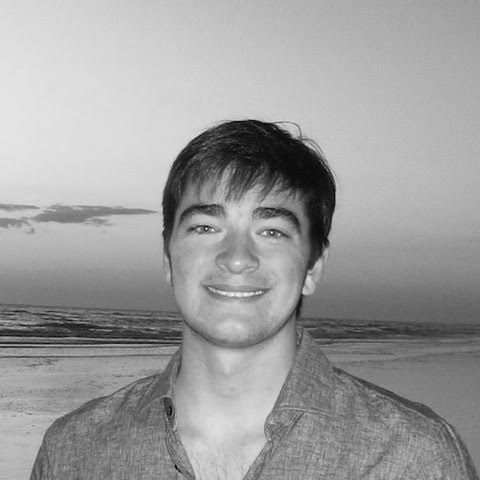
Charlie Scott is a student in the Class of 2029 at Dartmouth, pursuing a double major in History and Economics. The Mapping Rome project combines Charlie’s interests in history, cartography, and patterns of urban development. Charlie hopes to visit Rome to see the city in person and complete further studies there.

Emma Frost is a member of the class of 2029 at Dartmouth College. A prospective Art History major with a minor in Engineering Human Centered Design, Emma joined the Mapping Rome team to explore the intersection of these two fields. Additionally, she hopes to utilize this project as preparation for Dartmouth’s Art History Foreign Study Program in Rome, to which she has been accepted for the Spring 2027 Cohort.